MELLOW in practice: Our use cases
MELLOW – smart collaborative workflow development in the footwear industry
From concept to practice
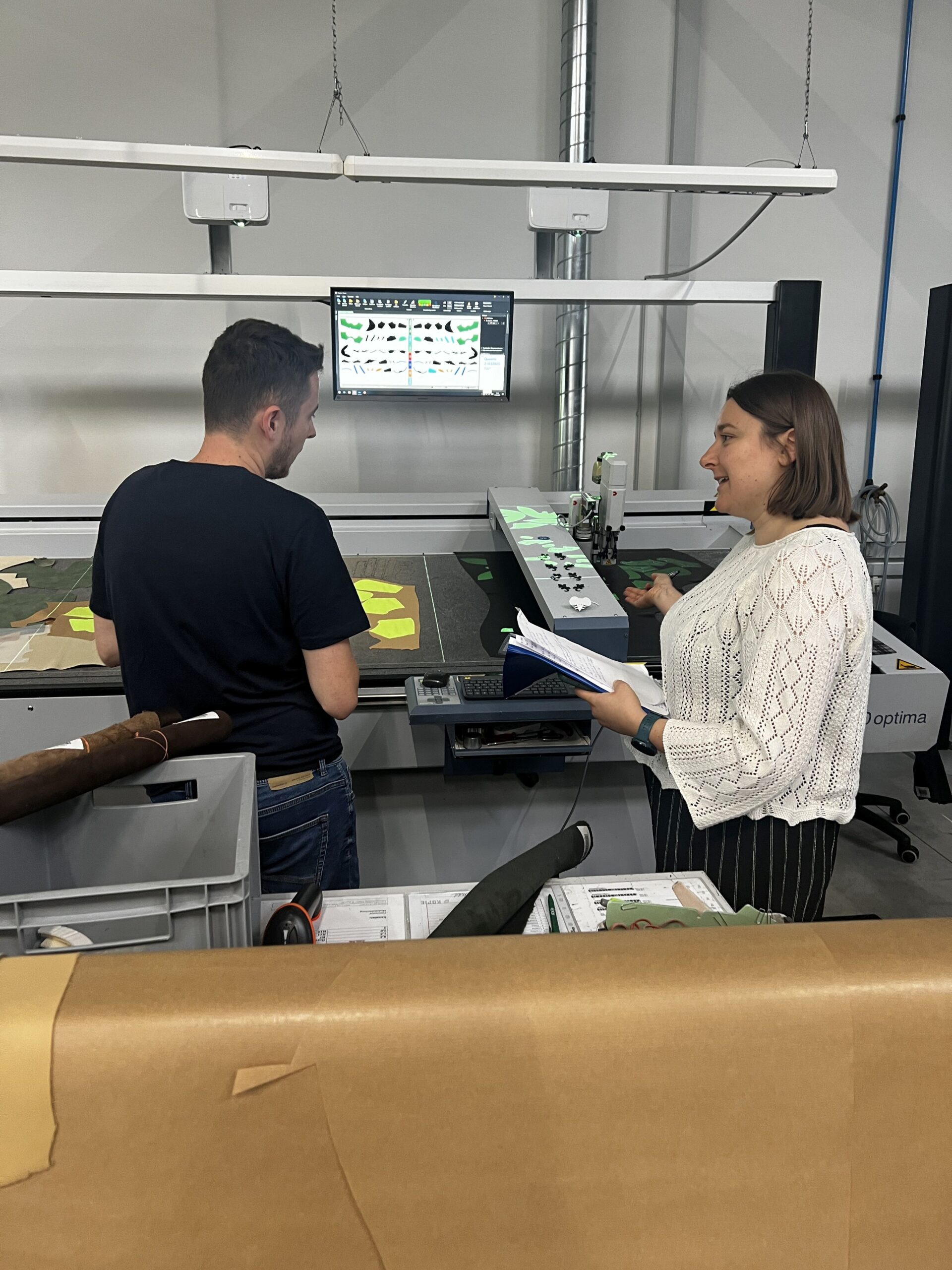
As part of the MELLOW project, we are developing AI-powered assistance systems for the European footwear industry and testing them directly in real-world settings. Our two application partners, Wildling Shoes and Solor, form the core use cases of the project. The technical partners, DFKI and MiniTec, are developing the AI-based assistance systems, which are being tested at the application partners’ production sites. Together with the employees, we are gathering feedback, analysing it and refining the systems step by step.
The European footwear industry is characterised in particular by manual tasks that can be associated with ergonomic strain. At the same time, it is becoming increasingly difficult to find qualified skilled workers. These challenges are to be addressed by ensuring that the assistance systems help to reduce ergonomic strain and also enable unskilled workers to carry out certain production steps at their workstations.
The two MELLOW application partners manufacture specialised niche products, such as barefoot shoes and orthopaedic uppers. To date, there are only a few digital tools suitable for small and medium-sized enterprises that can, for example, support the manufacture of bespoke products. MELLOW therefore focuses in particular on these small and medium-sized enterprises and their specific needs.
Use Case 1: Wildling Shoes
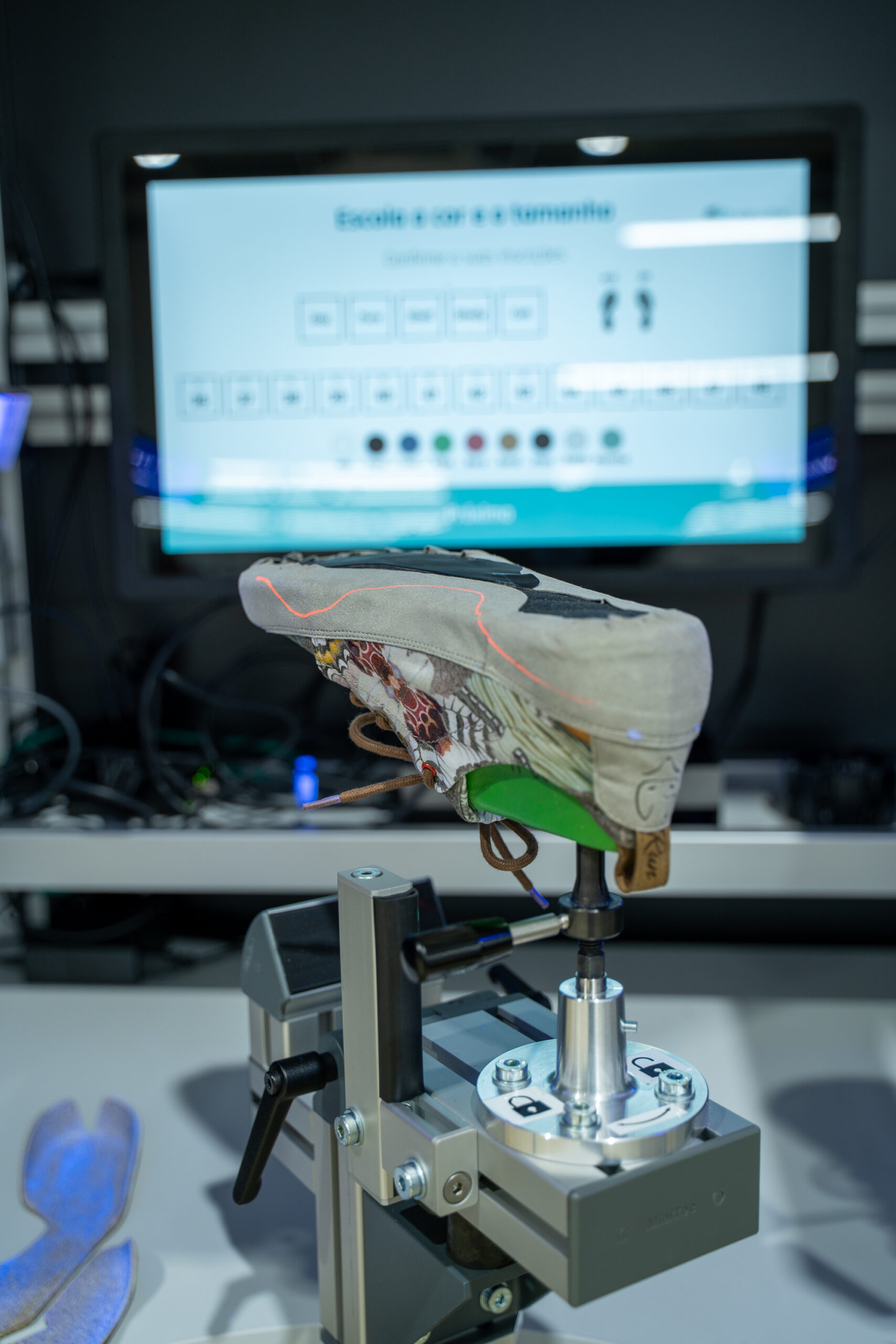
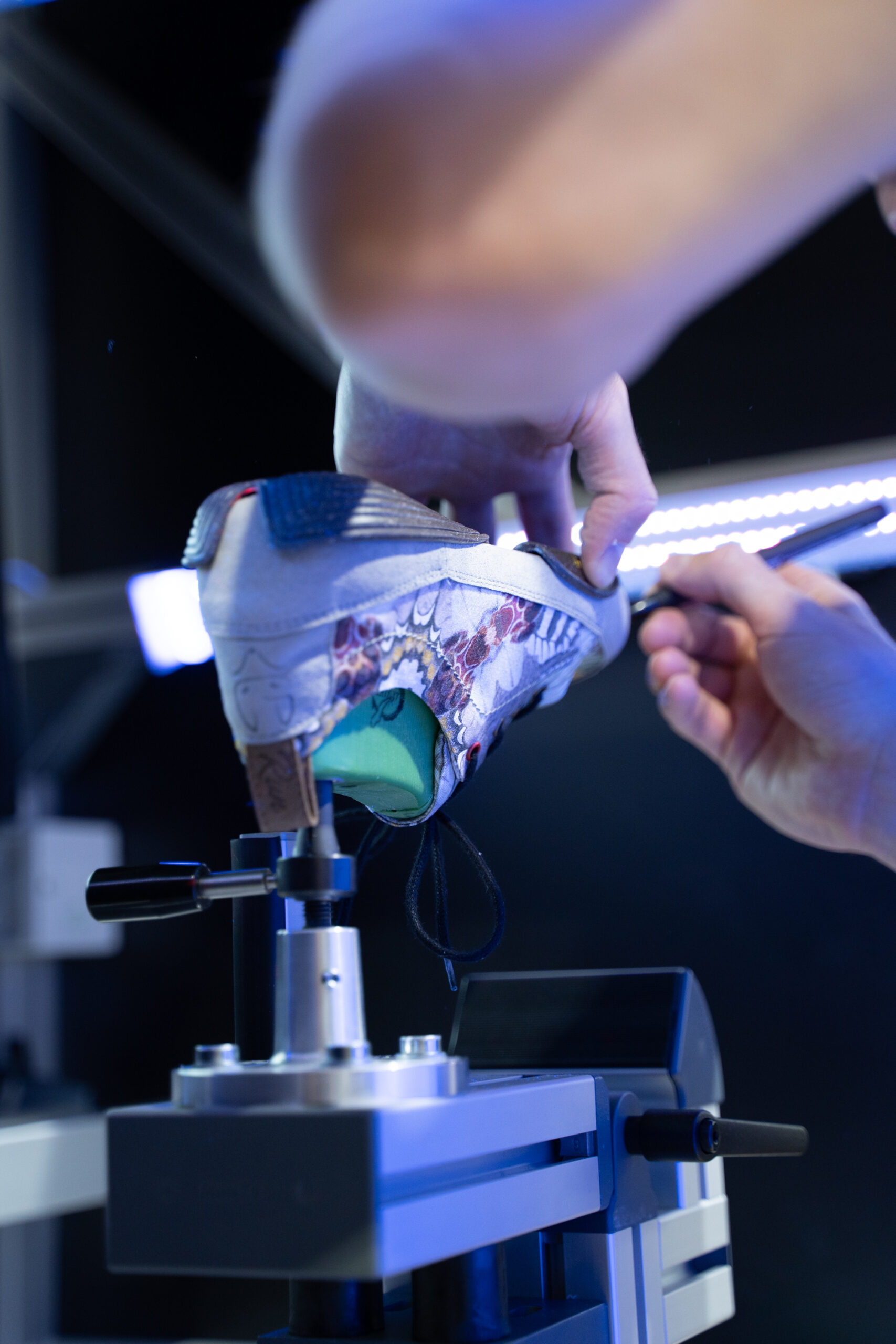
Wildling Shoes is a manufacturer of high-quality barefoot shoes with production facilities in Portugal, amongst other places. In MELLOW, the Wildling use case involves the development of an assistance system designed to initially support workers in marking the outsole, thereby contributing to the associated quality control. The marking stage of production was selected as part of the project because, on the one hand, it is prone to errors and, on the other, errors occurring at this stage can affect subsequent steps. It is also a production step carried out entirely by hand, which can lead to physical strain on workers. The assistance system developed consists of a table that enables the shoe to be clamped in place and the outsole to be marked, whilst simultaneously checking the quality of the markings.
In December 2025, the Portuguese partners (the production company Total Page and the agency Blue Sourcing) tested the prototype for the first time. Its ease of use and ergonomic benefits were highlighted as particularly positive aspects. At the same time, further suggestions for improvement were gathered. In particular, the workers wanted the system to respond more quickly and to provide immediate quality feedback whilst marking. During a second test in May 2026, the system was finally tested under real production conditions in Portugal. The new insights gained there are being incorporated directly into further development, so that the system can be improved in future and gradually integrated into the production line.
In addition to developing and evaluating the technical system, the partners in the Wildling use case are also collaborating more closely at an organisational level. In so-called ‘collaboration hubs’, joint topics relating to the European value creation network are addressed with a view to strengthening the culture of collaboration in international cooperation. The first collaboration hubs, focusing on topics such as the future of the European footwear industry and the quality of outsole markings, have already taken place.
Use Case 2: Solor
Solor, based in Pirmasens, manufactures bespoke components for orthopaedic shoes and is thus part of an internationally networked value chain within the footwear industry.
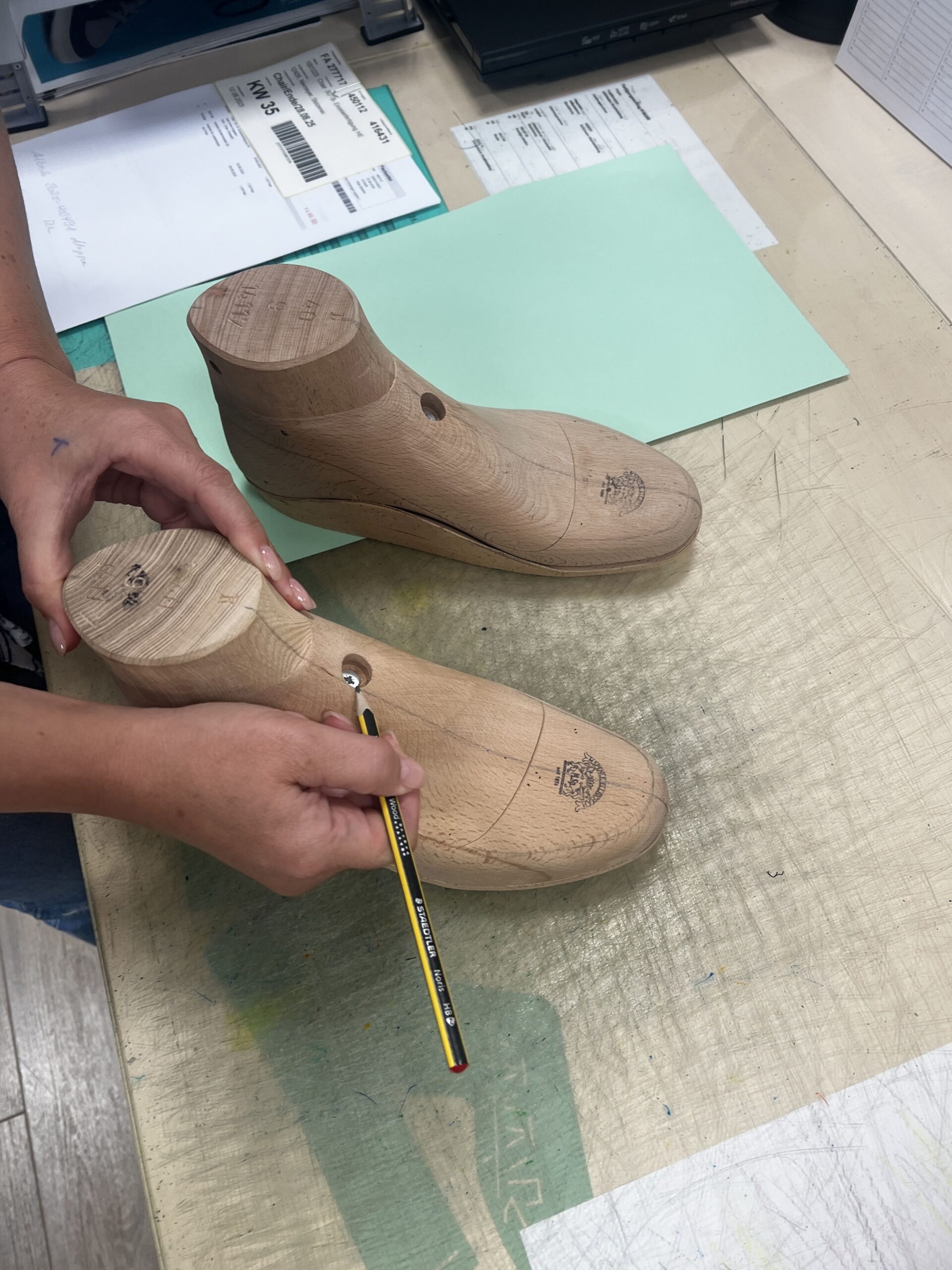
In the Solor use case, the focus is on the modelling stage. Here, you can either use a traditional mould or work with 3D data.
Solor’s aim is to save customers time, money and resources in the long term by eliminating the need to send physical last forms, allowing work to be carried out largely using 3D models. To achieve this aim, the first step is to improve the quality of the existing 3D data. To this end, Solor is testing and optimising the creation and editing of high-quality 3D data. An assistance system is being developed in which a 3D scanner is integrated into the workbench. The system supports even inexperienced users in carrying out 3D scans and processing the captured 3D data, so that it can be reused by the modelling department.
A long-term objective is also to involve customers in high-quality data preparation in order to improve the quality of the digital data exchanged between customers and Solor, thereby ensuring processes run as smoothly and efficiently as possible. At the same time, this use case also places a focus on organisational development. For example, an acceptance workshop was held with modellers to gain an understanding of their motivation, as well as their needs and concerns regarding the use of AI-based technical systems, so that these could be taken into account during the development of the assistance system. Furthermore, collaboration hubs with international customers are planned.
In this way, MELLOW aims to help make data exchange between small and medium-sized enterprises within an internationally networked value chain more efficient.